
Shelter Installation
Prioritizing convenience
Purchasing a protective steel shelter involves more than selecting the right model. It is important to understand in advance how the assembly will be delivered to the site, where it can be installed, whether a foundation is required, what lifting equipment will be needed, and who will be responsible for installation.
Zalizna Volia™ offers a practical and streamlined approach to installing protective steel shelters for industrial enterprises, manufacturing sites, offices, warehousing and logistics facilities, healthcare and educational institutions, critical infrastructure facilities, and other organizations.
The delivery and installation method is determined individually, depending on the shelter model, its weight and configuration, the location of the facility, and accessibility of the installation area.
We help select the shelter model best suited to your facility and organize installation considering the installation location, site access, and the condition and load-bearing capacity of the supporting surface.
Request a Consultation
How shelters are delivered
For our customers’ convenience, Zalizna Volia™ shelters are dimensioned to fit standard commercial freight vehicles.
The exact choice of delivery method depends on the selected shelter model.
Outdoor shelters are generally delivered fully assembled and positioned at the prepared installation location using a mobile crane or truck-mounted crane. Models intended for indoor installation may be supplied either fully assembled or in disassembled sections.
Before arranging delivery, our team assesses:
- The site address and access conditions
- The presence of gates, barriers, canopies, or other access restrictions
- Access-road width and the ability to position the delivery vehicle
- Availability of sufficient space for crane or truck-mounted crane operations
- The type and condition of the supporting surface
- The preferred shelter location

Is a foundation required?
For most Zalizna Volia™ shelter models, a dedicated structural foundation is generally not required.
The assembly can be installed on a level, stable surface capable of safely supporting its weight. Depending on the model, shelter weight may range from approximately 1 to 12 tonnes, so the condition and load-bearing capacity of the installation area must be assessed before delivery.
Suitable supporting surfaces may include:
- Concrete slabs or pads
- Asphalt pavement
- Paving slabs
- Well-compacted ground
- Other level and stable surfaces with sufficient load-bearing capacity
The primary requirements are the absence of excessive slope, settlement, voids, and unstable areas. If the site contains loose soil, uneven surfaces, or areas prone to water accumulation, the installation base should be modified in advance.
Where required, the shelter may also be secured to the supporting surface using anchor bolts. This option provides additional structural stability and is adjusted according to the shelter model, substrate type, and operating conditions.
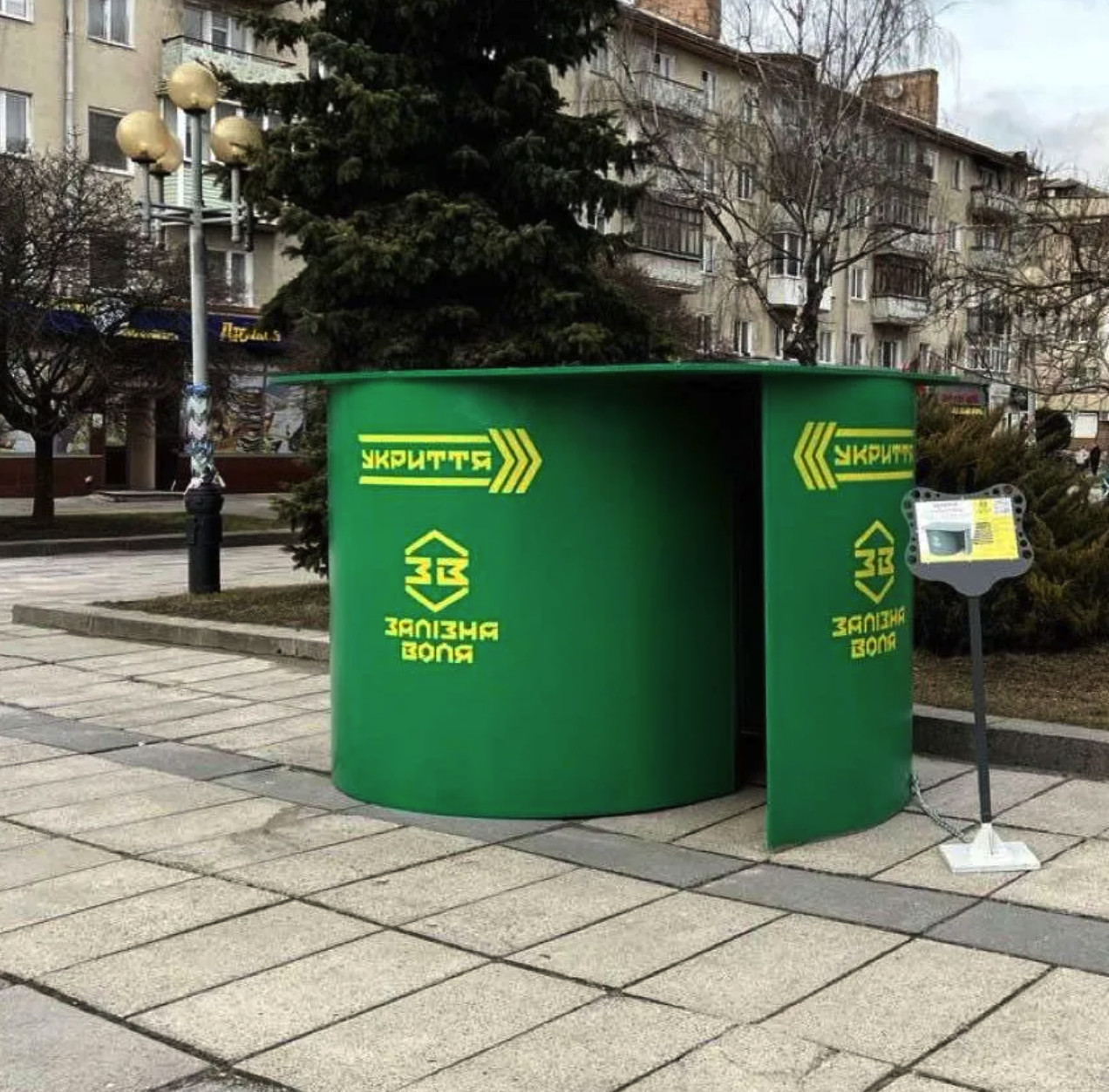
How an outdoor shelter is installed
After delivery, the shelter is unloaded using a mobile crane or truck-mounted crane and positioned at the designated installation point.
A typical installation process includes:
- Selection and approval of the shelter model, configuration, and installation location
- Preliminary assessment of site access and the installation area
- Supporting base readiness verification
- Delivery of the shelter to the site
- Unloading and positioning of the structure
- Levelling and, where required, anchor-bolt fastening
- Inspection of doors, hatches, ventilation systems, and optional equipment
- Final handover of the installed shelter to the customer
The exact scope of work depends on the selected model and equipment configuration.
Delivery costs, lifting-equipment hire, and installation services are calculated separately once the necessary information about the site has been provided.

Indoor shelter installation
Installing a shelter inside a production workshop, office building, warehouse, or other existing facility can present additional challenges due to narrow doorways, corridors, stairways, or limited access for lifting equipment.
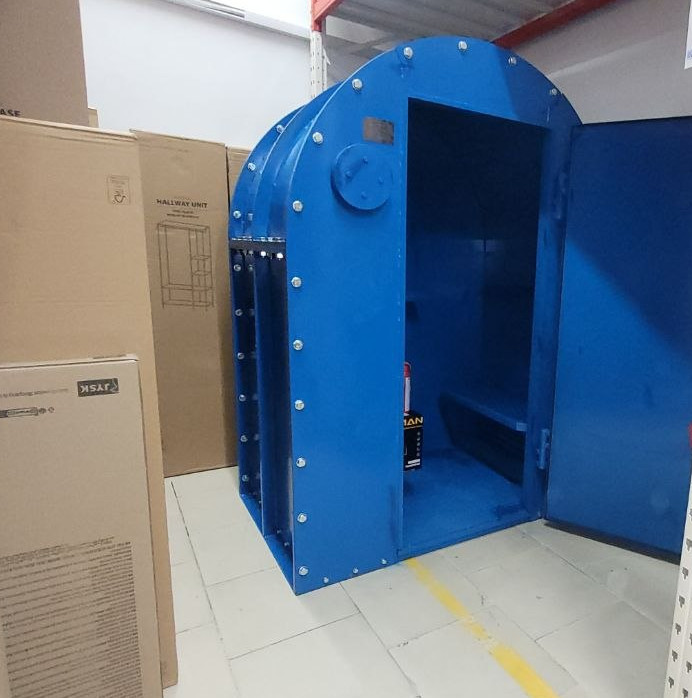
For such environments, modular quick-assembly models, including the Boomie LIGHT, provide an effective solution.
The structure can be delivered in separate sections. Individual components are dimensioned to pass through standard door openings, after which the shelter is assembled directly inside the designated room.
Structural sections are joined using bolted connections in accordance with the technical assembly instructions. This makes it possible to position the shelter closer to permanent workstations.
Assembly may be carried out by:
- The customer’s personnel in accordance with the supplied assembly instructions
- A specialist installation crew provided by Zalizna Volia™
Engaging a professional installation team minimizes the customer’s organizational burden and ensures assembly is carried out by specialists experienced with the shelter’s structural design and installation requirements.
Request a Consultation
Adjusting the installation to your facility
For one enterprise, the optimal solution may be a fully assembled outdoor shelter positioned next to a production building. For another, several compact shelters located directly within working areas may provide better protection. At a facility with restricted access, the most practical option may be delivery in separate sections followed by on-site assembly indoors.
Key factors to consider:
- Distance between employee workstations and the shelter
- Number of personnel in each operational area
- Availability of a safe and unobstructed access route
- Access and working space for lifting and installation equipment
- Characteristics and load-bearing capacity of the supporting surface
- Internal building layout
- Potential requirement for future relocation of the shelter
The specialists at Zalizna Volia™ will help assess these factors, select the appropriate shelter model, and determine the most practical installation method for your facility.
-
In most cases, no. A shelter can be installed on concrete, asphalt, paving slabs, or well-compacted ground. The supporting surface must be level, stable, and capable of safely carrying the weight of the selected model.
If there is any uncertainty regarding the condition or load-bearing capacity of the installation area, it should be assessed beforehand and fixed if necessary.
-
A mobile crane or truck-mounted crane is typically used to unload and position fully assembled shelters.
The required lifting equipment depends on the shelter’s weight, the distance between the vehicle position and the final installation point, lifting radius, and any obstacles or access restrictions at the site.
-
Yes. Certain models can be delivered in disassembled sections and assembled directly inside the building.
For example, the individual components of the Boomie LIGHT can be moved through standard door openings and subsequently joined using bolted connections at the designated installation location.
-
The shelter can be assembled either by the customer’s technical staff in accordance with the provided installation instructions or by a Zalizna Volia™ specialist installation team.
Professional installation helps reduce installation time and minimizes the internal resources required to manage and coordinate the process.
-
Yes. For additional stability, the shelter can be secured to the supporting surface using anchor bolts.
The need for anchoring, as well as the appropriate anchoring method, is determined according to the shelter model, substrate type, and site-specific operating conditions.
-
The cost depends on several factors, including:
– Shelter model and weight
– Distance to the customer’s site
– Type of transport required
– Requirement for a mobile crane or truck-mounted crane
– Site-access complexity
– Unloading and positioning conditions
– Requirement for anchor-bolt fastening
– Requirement for on-site assemblyA detailed quotation is prepared once the necessary information about the facility and installation conditions has been received.